A high-stakes meeting is anticipated in Abuja today as the federal government is expected to present a counter offer to university teachers in an attempt to turn years of stalled renegotiations into tangible, implementable commitments with the Academic Staff Union of Universities, or ASUU, in an effort to finally close the chapter on the lingering 2009 ASUU agreement.
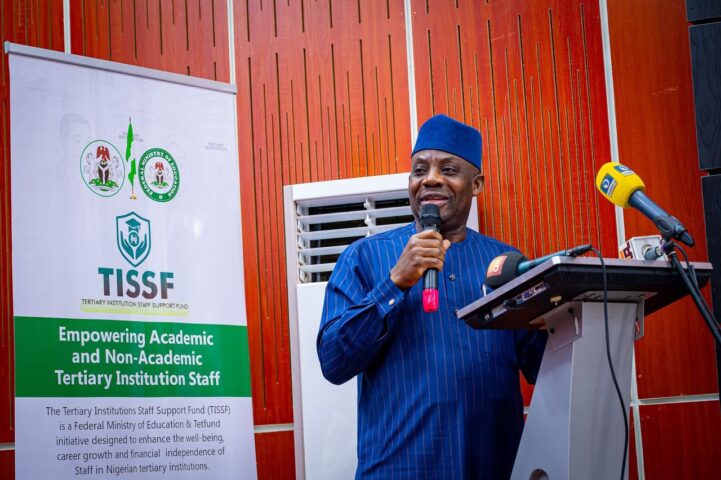
According to informed sources, Dr. Maruf Tunji Alausa, the Minister of Education, will meet with ASUU leaders in Abuja along with the Minister of Labor, representatives from the National Salaries, Incomes and Wages Commission, NSIWC, and the Solicitor-General to discuss how to finally put the 2009 FGN–ASUU agreement and related reports from the most recent round of negotiations into effect.
The meeting’s objective, according to officials, is to present a precise timeline for signature and gradual implementation.
The move is urgent because a renegotiation process ended in December 2024 and was formally presented to the government in February 2025, despite warnings from ASUU branches across the country that their patience is running out.
In order to prevent another nationwide shutdown of public colleges, union officials insist that the draft be approved and put into effect immediately.
Recall that during a briefing in Abuja, Prof. Al-Amin Abdullahi, the ASUU, Abuja Zone Zonal Coordinator, emphasized that the union had fulfilled its end of the agreement and that the government should show that it was serious by approving the report right away.
The 2009 agreement, which was signed under the late President Umaru Musa Yar’Adua, is still the focal point of the conflict. It promised extensive reforms to Nigeria’s public universities, including institutional autonomy, sustained funding for revitalization, a negotiated package of academic salaries and conditions, and an implementation monitoring system.
Recurrent strikes have resulted from its partial or non-implementation in consecutive governments.
According to analysts, the system has lost almost five years of academic time as a result of cumulative industrial action by ASUU and other unions since 1999. This interruption has damaged public trust in the nation’s higher education system.
However, government sources and stakeholders contend that the strategy taken by Education Minister Tunji Alausa, who has blended short-term corrective action with longer-term structural changes, is what sets the current process apart.
The Tinubu administration paid out N50 billion earlier this year to university employees and professors who owed earned academic allowances (EAA), a debt that had accumulated for nearly 20 years and frequently sparked strikes. The action, which was explicitly attributed to Alausa’s involvement, was hailed on campuses as a sign that the government could finally fulfill its commitments and a restoration of trust.
In addition to arrears, Alausa has started the Diaspora BRIDGE Initiative, a digital platform that links Nigerian professionals overseas with domestic institutions via curricular support, research collaboration, guest lectures, and mentoring.
The platform has been hailed by policy voices such as Dr. Dakuku Peterside and Prof. Yemi Oke as a purposeful and credible method of turning brain drain into brain circulation. This is another proof that the current administration views education reform as a systemic process rather than an episodic one.
According to sources in the ministry of education and labor circles, today’s work will be focused on mapping phased fiscal commitments into the national budget, creating a legally sound document for signature, and reconciling the Yayale Ahmed draft, which was completed in December 2024, with the original 2009 text and later reports like the Nimi Briggs recommendations.