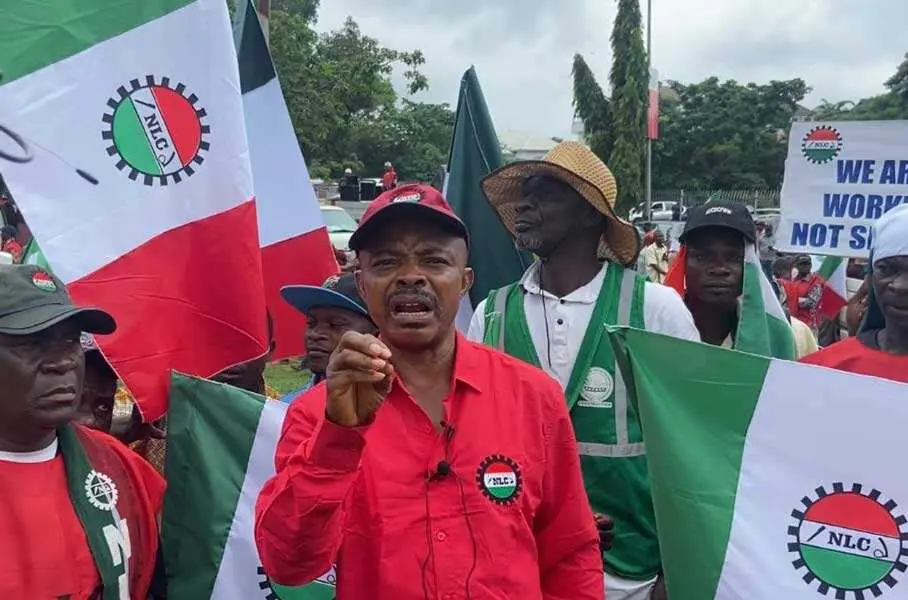
Following the bold actions taken by several states across the nation to raise their workers’ minimum wages above the N70,000 benchmark in response to the prevailing economic realities, the Nigeria Labour Congress (NLC) and federal government workers have demanded an urgent review of the national minimum wage, arguing that the current 70,000 is no longer sustainable.
The labour unions and workers who spoke to the News Agency of Nigeria (NAN) in separate interviews argued that the N70,000 minimum.
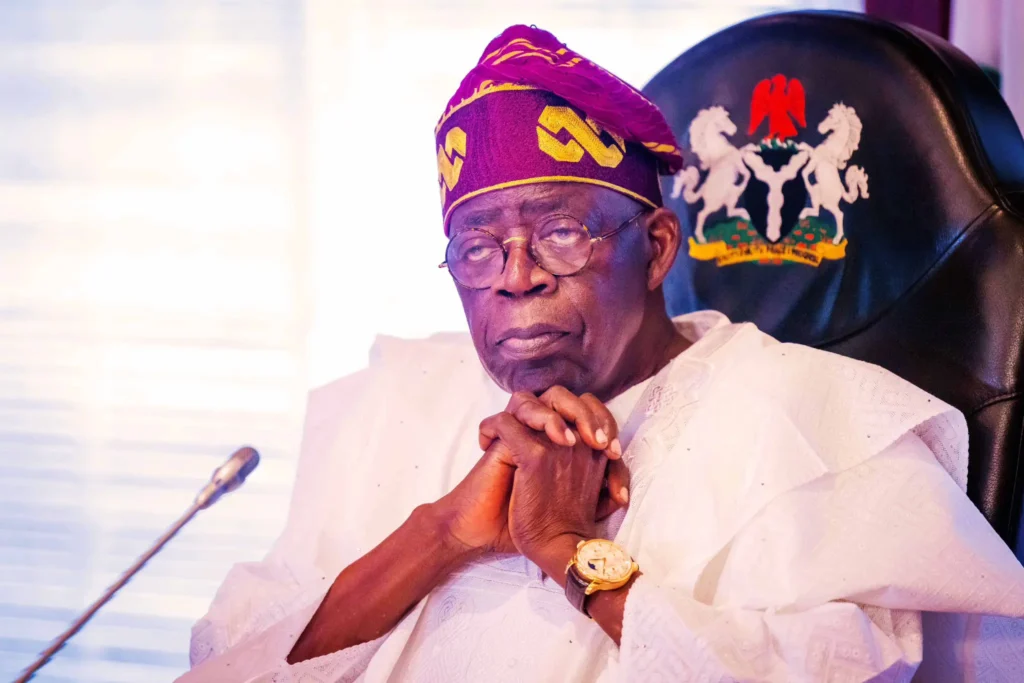
As you may remember, in July 2024, President Bola Tinubu signed the new National Minimum Wage Bill into law, increasing the minimum wage from N30,000 to N70,000. The amended law applies to the entire country, including the federal government, states, local governments, and the private sector.
However, on August 27, 2025, Imo raised the minimum wage from N70,000 to N104,000, along with corresponding increases in the entire salary structure for the state’s civil servants. The state governor, Hope Uzodinma, had stated in a meeting with organised labour that the salary review was part of an effort to improve worker welfare. NAN also notes that, prior to Uzodinma’s audacious and well-received action, some other states had raised their minimum wages.
Lagos State Governor Babajide Sanwo-Olu declared on October 16, 2024, that the minimum salary will be raised to ₦85,000, with a further increase to 100,000 in 2025.
On October 18, 2024, Rivers State adopted a minimum salary of ₦85,000, while Bayelsa, Niger, Enugu, and Akwa Ibom states approved a minimum pay of ₦80,000 for their employees.
Benue and Osun states increased the minimum salary to N75,000, Ondo state set its own at N73,000. Ogun and Delta states are enforcing a minimum pay of N77,000.
The NLC’s acting general secretary, Mr. Benson Upah, told NAN in Abuja on Sunday that many workers are unable to satisfy their basic necessities since inflation has reduced the value of the N70,000 minimum salary.
The fact is that, given the current state of the economy, ₦70,000 is not sustainable.
“Workers are under tremendous pressure, and the survival issue will only get worse if the government doesn’t act swiftly.
Since then, we have discussed this issue with the Federal Government in a variety of settings and at various times.
“We hope the government will see the moral and economic obligations to do so quickly,” he stated.
In order to fortify the collective fight, he also exhorted employees to be together and involved in union operations.
The Association of Senior Civil Servants of Nigeria (ASCSN) President, Mr. Shehu Mohammed, also praised the state governors for raising the minimum salary.
He called the action a wake-up call and a positive development.
According to the president of the ASCSN, the federal government should take note of the actions performed by subnational administrations.
“We demanded a living salary from the start of the talks, and we offered ₦250,000 as a fair starting point.
He stated, “We informed the government that anything less only gets a worker to the office gate, not back home.”
He clarified that 70,000 has lost value because to rising transportation, food, and utility costs.
“Let’s be practical. The money left over after paying ₦70,000 for energy bills is insufficient to support a family for ten days, he continued.