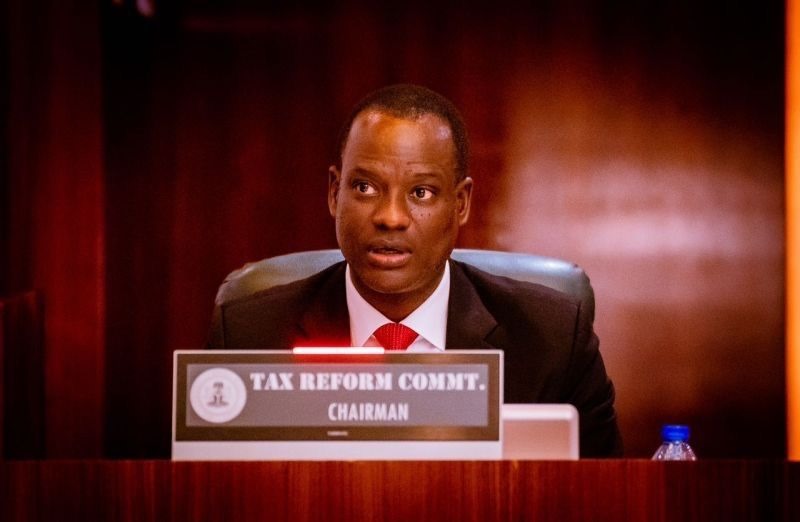
Taiwo Oyedele, the chairman of the Presidential Committee on Fiscal Policy and Tax Reforms, stated that the goal of the proposed fuel tax is not to put additional financial burden on households but rather to create a special fund for Nigeria’s failing roads.
Although Oyedele acknowledged public concerns that recent tax reforms would make inflation worse, he maintained that better road infrastructure is necessary to reduce the cost of transporting people and products.
In an interview with Channels Television’s Morning Brief on Tuesday, he explained this.
One of the levies under the newly passed Nigeria Tax Act, 2025, is a 5% fuel surcharge, which is expected to go into force in January 2026.
It has, nevertheless, raised concerns about possible inflation. If the federal government does not remove the tax, the Trade Union Congress has vowed to launch a statewide strike in two weeks.
He acknowledged, “I know everyone is worried about the impact on inflation, and I’m worried myself.”
However, we are also aware of how crucial road infrastructure is globally. Only over 60,000 of Nigeria’s 200,000 kilometers of roads are in good condition. This is the major reason why transporting anything in Nigeria, whether goods or people, is costly and unsafe.”
Oyedele pointed out a wide disparity in food costs between rural and urban areas and directly connected inflation to the condition of the roads.
When comparing the cost of food in rural areas to that in urban areas, the difference can occasionally be as much as 5%. That difference would be less than 1% in the majority of nations. Most of the problems are related to the condition of the roads and the various levies that are collected whenever you transport things.
The tax was “introduced in 2007, and it wasn’t implemented because government was subsidizing fuel,” he said, refuting the idea that the surcharge was superfluous once the subsidy was eliminated.
The Chairman contended that fuel subsidy earnings by themselves are not enough to bridge Nigeria’s infrastructure deficit, even if he claimed that the elimination of fuel subsidies has created fiscal room.
“Those revenues alone will not be sufficient to address the enormous gap we still have in terms of infrastructure development, even with the removal of fuel subsidies,” he stated.
According to Oyedele, the surcharge will be used carefully to prevent inflaming inflation or harming the weaker members of society.
One way to implement this surcharge would be to time it during a time when the value of the currency is rising. Yesterday alone, the value of the naira increased by 1%; if it increases by roughly 5% and this tax is applied, no one will notice the changes in the pump price. You can also get it at that time if the price of crude oil on the global market falls by roughly 5%, he clarified.
Oyedele emphasized that the money raised from the levy would be used to repair Nigeria’s deteriorating roads and would be ring-fenced.
“Then we can all concentrate this money to make sure that it is allocated to repairing roads that can improve our lives and lower the cost of goods,” he stated.
The Road Infrastructure Tax Credit Scheme, which enables private enterprises to make direct investments in road development in exchange for tax credits, has been successful, he added.
We may observe the benefit of the road infrastructure tax credit that is administered by the private sector. Because companies like Dangote, NLNG, Lafarge, and MTN are fixing roads in accordance with that policy, residents of Apapa are unable to file any complaints at all,” he stated.