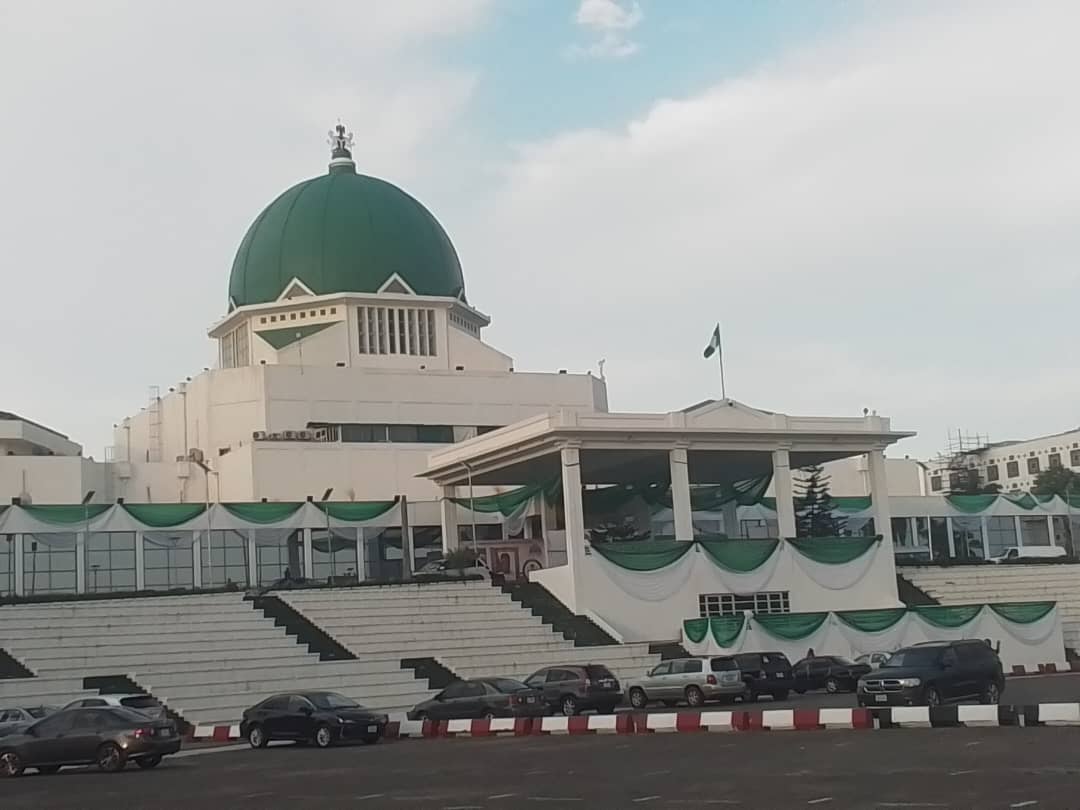
On Tuesday, the House of Representatives called on the Federal Government and the Academic Staff Union of Universities to immediately resume negotiations in order to settle the ongoing conflict that resulted in the union’s announcement of a two-week warning strike.
Following the acceptance of a motion of urgent public significance made by Oluwaseun Whinghan, the member representing Lagos State’s Badagry Federal Constituency, during plenary, the House passed the resolution.
Due to the Federal Government’s apparent inability to address long-standing issues, such as the implementation of the 2009 ASUU-FGN Agreement, revitalisation financing, earned academic allowances, compensation structure, and university autonomy, ASUU launched a two-week warning strike on Monday.
Dr. Yusuf Sununu, the Minister of Education, had promised before to the start of the strike that the administration of President Bola Tinubu was in the last stages of negotiations with ASUU to settle all remaining issues.
Whinghan, who moved the motion, voiced his profound concern over the resumed strike and cautioned that similar industrial actions have in the past grown into protracted shutdowns that interfere with academic calendars, impede research, and exacerbate the annoyance of lecturers, parents, and students.
“ASUU has characterised the strike as a warning, but past experiences demonstrate that these actions frequently turn into protracted work stoppages,” he said.
“We are aware that any disruption reduces the nation’s competitiveness, scientific advancement, and youth productivity, and that the Nigerian university system continues to be essential to innovation, human capital growth, and national development.”
He emphasised that the Federal Government and university unions have a shared responsibility to preserve the continuity and quality of education, which is legally regarded as a major force behind social and technical advancement under Section 18 of the 1999 Constitution (as amended).
Whinghan bemoaned the fact that frequent strikes in the higher education sector have undermined national stability and Nigeria’s long-term development objectives by causing brain drain, student dropouts, and a decline in public trust in the country’s university system.
In the interest of students and the country, he advocated for “renewed dialogue anchored on mutual respect, transparency, and good faith, with the legislature serving as a neutral facilitator.”
The House ordered its Committees on University Education and Labour, Employment, and Productivity to step in right away to arbitrate a mutually agreeable and long-lasting solution between the Federal Government and ASUU after the motion was unanimously adopted.
To arbitrate the situation and guarantee that striking teachers return to the classrooms as soon as possible, the House also decided to form an Ad-hoc Committee, which will be led by Speaker Tajudeen Abbas.
It called on both sides to be cautious, to engage in communication, and to put the needs of students and the advancement of the country above all else.
In order to avert future strike actions, the House further urged the Federal Government to create a permanent joint consultative forum with recognised university unions for ongoing engagement.
Additionally, the Committee on Legislative Compliance was instructed to keep an eye on the mediation efforts and update the House on their progress within a week.