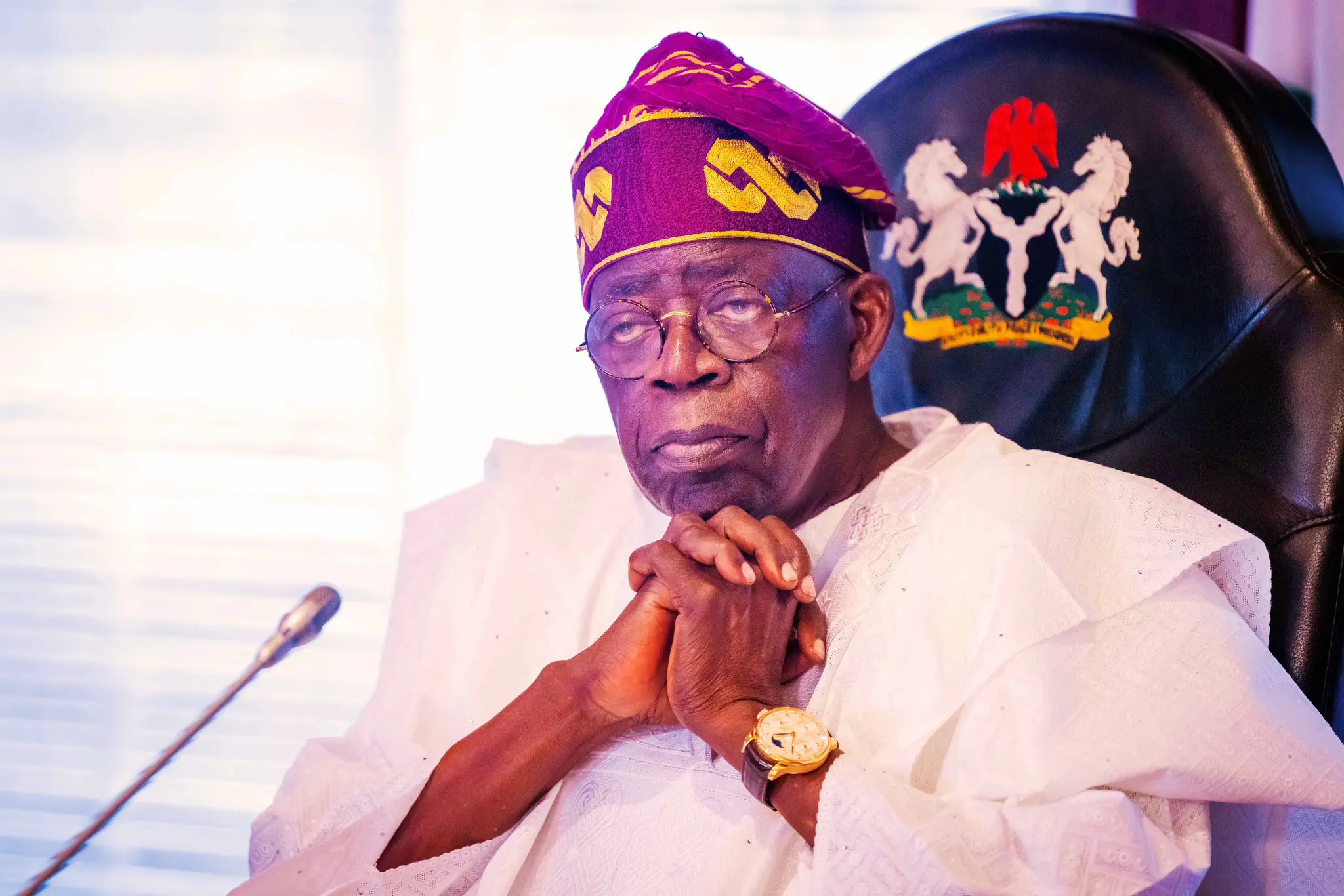
In the midst of mounting public outrage over the inclusion of some high-profile and violent offenders among those pardoned by President Bola Tinubu, there were hints on Thursday that some names on the presidential pardon list approved by the Council of State, as presented by the Attorney-General of the Federation, Prince Lateef Fagbemi (SAN), may be removed.
The presidential pardon, which is typically granted to commemorate national occasions, was also intended to decongest prisons and foster reconciliation. The Attorney-General’s statement stated that the decision was made in accordance with recommendations made by the Presidential Advisory Committee on the Prerogative of Mercy, which was chaired by the Attorney-General.
However, the most recent episode has rekindled debate over the transparency and integrity of Nigeria’s pardon process. Fagbemi (SAN) clarified on Thursday that the Presidential Prerogative of Mercy recently announced by the President was still under review and had not been finalised.
The list of beneficiaries was further divided into six categories: those granted pardon, posthumous pardon (including the Ogoni Nine), victims of the Ogoni Nine honoured, presidential clemency (clemency beneficiaries), inmates recommended for reduced terms of imprisonment, and death row inmates whose sentences were commuted to life imprisonment.
The inclusion of some names has been controversial, and security and anti-graft organisations, such as the National Drug Law Enforcement Agency and the Economic and Financial Crimes Commission, have reportedly taken steps to prevent the dissemination of some of the list’s names.
The 175 prisoners and ex-offenders who were pardoned by the president included illegal miners, white-collar convicts, drug offenders, foreigners, Maj Gen Mamman Vatsa, Prof Magaji Garba, Ken Saro-Wiwa, and the Ogoni Eight, as well as capital offenders like Maryam Sanda, according to Fagbemi at the October 9, 2025, Council of State meeting.
The Presidency issued a statement on Saturday, October 11, 2025, revealing the complete list.
The inclusion of several people connected to violent crimes and security breaches generated uproar, even though some of the names of Politically-Exposed Persons on the list, such as Farouk Lawan and Herbert Macaulay, did not cause much controversy.
Maryam Sanda was one of them; she was found guilty in 2017 of killing her husband, Bilyaminu Bello, by stabbing him.
The father of Maryam, Alhaji Bello Isa, and Maryam’s father, Alhaji Garba Sanda, spoke in a news conference to accept the presidential pardon, despite the fact that some members of Bello’s family opposed it.
Additionally, the President pardoned one Kelvin Prosper Oniarah, whose kidnapping terror covered Delta, Edo, Rivers, Abia, Benue, and Oyo states, with detention camps in Warri and Kokori (Delta), Ugbokolo (Benue), Benin City (Edo), and Aba (Abia), as well as Major S. Alabi Akubo, who was sentenced to life in prison for unlawfully possessing prohibited firearms.
Among other charges, the list included the names of people convicted of murdering security guards, illegal drug couriers, and others who were tried for money laundering.
According to reports, the controversy has led to a reconsideration of the clemency procedure, and the Presidency is thinking about removing names that have drawn condemnation from the public.
Security agencies kick
The EFCC, Independent Corrupt Practices and Other Related Offences Commission, NDLEA, and lead security agencies had voiced strong objections to the list, according to a presidential aide with knowledge of the situation who spoke on condition of anonymity because he was not authorised to comment on the subject. The aide insisted that some of the names were “smuggled in” and were not among those suggested by the presidential committee that screened applicants for clemency.
According to him, anti-graft organisations cautioned that the current battle against organised crime and corruption may be jeopardised if some of the prisoners are released.
Some of the suggested recipients, he claimed, “can never be released,” especially those convicted of killing security personnel or committing kidnapping and other capital offences, according to a top security source.
Some of the names did not pass the required security testing, and the list was excessively broad.
The NDLEA, EFCC, and other security organisations have demanded that the list be whittled down. The presidential adviser stated that not all of the names were from the committee that examined the cases.
The final list would probably omit anyone whose release could endanger public safety or erode trust in the legal system, according to officials with knowledge of the situation.
“Only those who truly merit the President’s pity will be included on the list. “Those whose inclusion caused controversy will be expunged,” a top official told The reporter on Thursday, speaking on condition of anonymity.
“Some low-level officers at the level of the committee smuggled in some names,” stated another official in one of the security organisations. Of course, some of the names on the list are unknown to the President.
The list has already been forwarded for evaluation to the NDLEA and other security organisations. A few names on the list didn’t fit the requirements. A few lower-level officials disregarded the requirements.
Some of the cases are actually still pending. The fact that they are still being held and not released is a good thing.
Also speaking on condition of anonymity was a representative of one of the anti-graft organisations.
“I am aware that the ICPC and the police are uncomfortable with the list because it contains the names of some convicts who shouldn’t be on it,” he said.
Agency representatives were not prepared to remark on the issue when contacted for comment.
List to be reviewed
Fagbemi (SAN) said on Thursday that the recently announced Presidential Prerogative of Mercy was still being reviewed and was not yet finalised.
The minister confirmed in an Abuja statement that no prisoner who had been granted clemency under the most recent exercise had been freed from detention.
Before any instrument of release is given, Fagbemi states that the procedure is still in its last administrative stage, which includes a standard check to make sure that all names and suggestions completely adhere to established legal and procedural standards.
He added that the issue of the official document putting the President’s decision into effect for each beneficiary came next in the process, following the Council of State’s approval.
Before the instrument is sent to the Controller-General of Corrections for the required action, this stage provides a chance for a final review of the list for remedial purposes, if needed.
“The government’s commitment to transparency and due diligence is reflected in this verification process, which is part of the standard protocol,” the AGF stated.
Fagbemi praised the public’s attentiveness and helpful criticism, saying it demonstrated Nigerians’ strong commitment to justice and responsible leadership.
“The procedure is proceeding without any delays; it is only adhering strictly to the law to guarantee that only those who are legally eligible receive the President’s leniency. The public will be properly notified as soon as all legal and procedural checks are completed. The rule of law guarantees justice without hurrying.