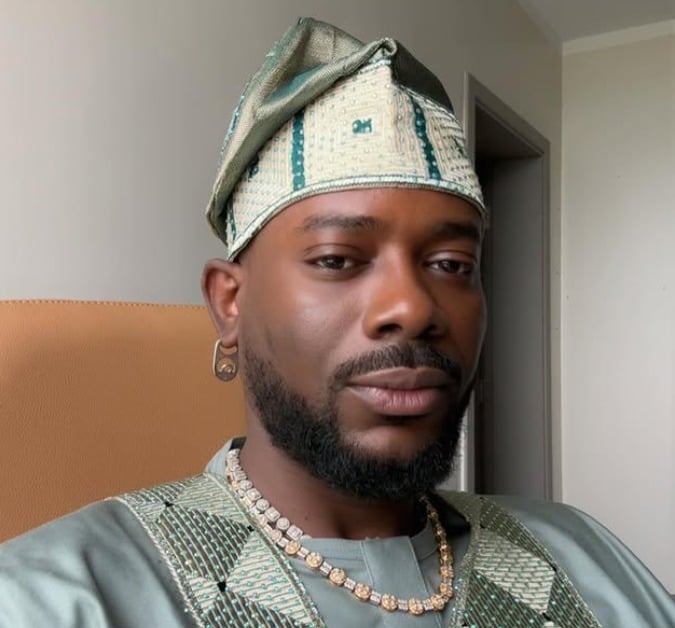
With the release of his sixth album, “Fuji,” on Friday, Nigerian musician Adekunle Gold pays homage to his homeland’s traditional sounds, marking a return to his roots.
“That sound serves as Lagos’s theme music.” It is present everywhere. Afrobeats and everything else we hear today were born out of that sound,” Gold told AFP in Paris.
The Indigenous Yoruba community, one of the biggest ethnic groupings in West Africa, serves as an inspiration for the Afropop icon, who is descended from the Kosoko royal line.
The 38-year-old singer described it as “one of the oldest sounds of Nigeria.”
Fast beats, a big ensemble of percussion instruments, and songs centred around important social concerns are characteristics of Fuji music, a popular genre that originated in Yoruba Muslim culture.
Shortly after Nigeria gained independence in the 1960s, the genre flourished there.
Fuji music was named after the well-known Japanese mountain by the late singer-songwriter Ayinde Barrister, who is considered to be its founder.
Gold combines the appealing melodies of modern R&B with traditional elements from Nigeria’s rich musical heritage.
He is a representative of this generation of Nigerian musicians, like Burna Boy or Davido, who have united the past and present for a global audience.
Your body moves when you listen to it. The vocalist declared, “It’s magical.”
Every Nigerian music, whether it’s from Fuji or Highlife, another traditional genre, makes you feel alive. That’s why it does well, in my opinion,” he continued.
His song video for “Party No Dey Stop,” a viral duet with fellow Nigerian Zinoleesky, has had 29 million views on YouTube and features vibrant costumes, energetic dancing, and boats draped in flowers. The song is his first major hit in the United States.
After covering a song by the well-known boy band One Direction in 2014, Gold—also known as AG Baby—became well-known in Nigeria.
He has since joined the American label Def Jam Recordings and worked with Pharrell Williams and funk icon Nile Rodgers on the song “Falling Up.”
SPREADING CULTURE
Gold encourages listeners to explore the depths of his most recent album, which is an emotional journey influenced by important moments in his life.
“I talk about how I was devastated when my father passed away. He clarified, “I talk about my daughter, my love life, and being a family man.”
Gold claimed that although he resides in the United States, his “heart is in Lagos.”
“I’m sharing the culture, discussing my ancestry, and discussing customs,” he stated.
But problems still exist in Nigeria, where almost 60% of people live below the poverty level.
Gold expressed optimism for his nation’s future by saying, “There have been steps in the right direction.”
He went on to say, “The government cannot do everything,” and urged everyone to “do what we can as citizens.”
Gold has dealt with sickle cell disease his entire life and is dedicated to fighting it. This year, he established a foundation to support local charities and pay for treatment.