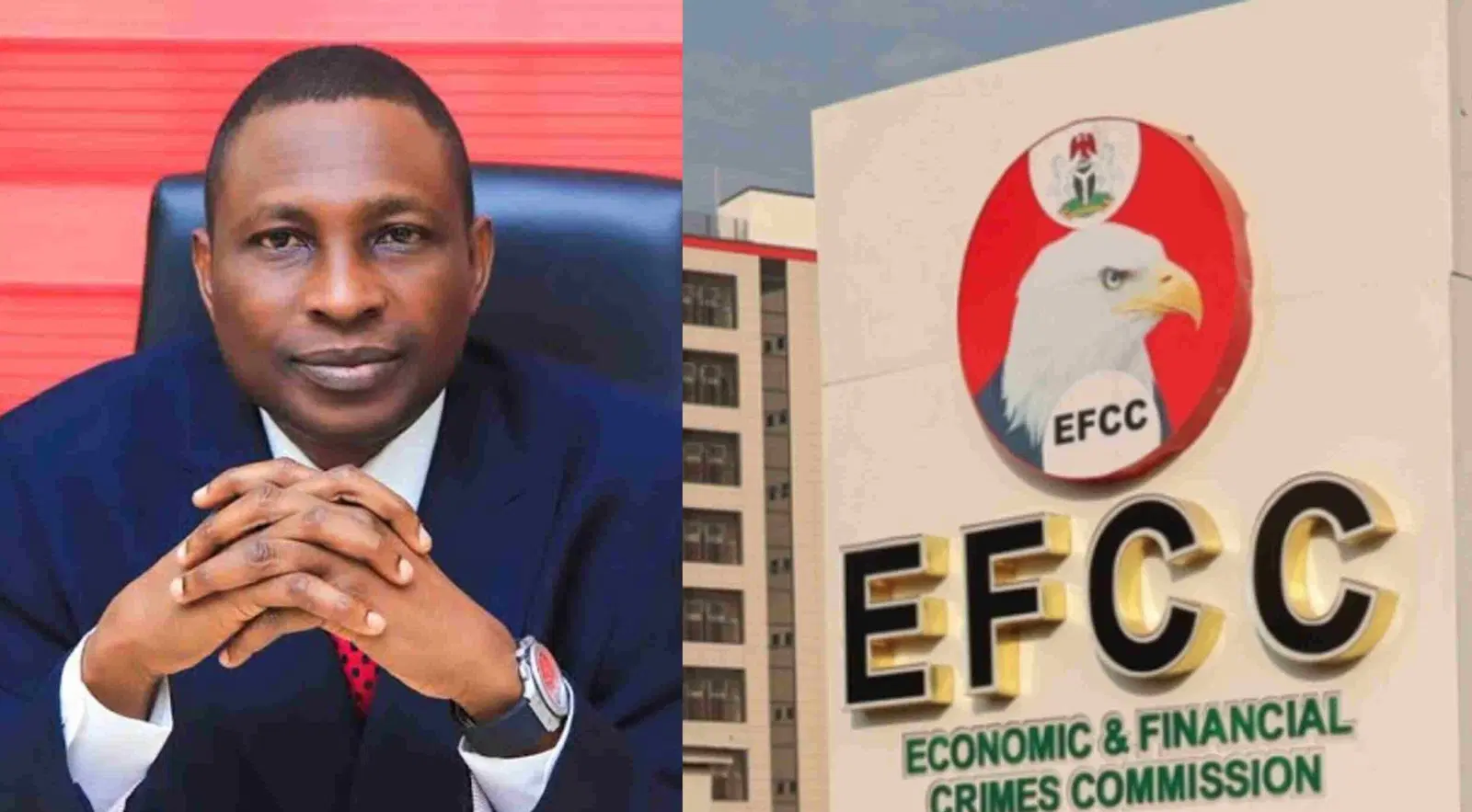
In order to completely eradicate corruption in Nigeria, the Economic and Financial Crimes Commission (EFCC) has advised citizens to adopt a culture of accountability and openness.
At the 12th annual conference of the Association of Communication Scholars and Professionals of Nigeria (ACSPN) in Effurun, Delta, Mr. Ola Olukayode, the Chairman of the EFCC, issued the call.
Mr. Williams Oseghale, an Assistant Commander and Head of Public Affairs for the Commission’s Benin Zonal Directorate, attended the ceremony on behalf of the anti-graft chairman.
According to the News Agency of Nigeria (NAN), the federal government hired a private pipeline security company called Tantita Security Services Nigeria Limited (TSSNL) to sponsor the initiative.
Olukayode stated in his keynote speech that if we all fulfill our responsibilities as decent citizens, effective governance may be achieved.
advertisements from “As individuals, it is our responsibility to be responsible, open, and dedicated to due process and procedures.”
“Every issue pertaining to Nigeria’s socioeconomic development at the moment can be linked to the effects of corruption.”
“Those in charge of our resources have mismanaged, misused, and embezzled them, which has led to the escalating issues of unemployment, insecurity, poverty, diseases, low life expectancy, hunger, kidnappings, and other issues,” he stated.
Nigeria’s reputation as an African country with a deeply ingrained culture of corruption and impunity, according to the head of the EFCC, is concerning.
Olukayode urged the media to increase their opposition to corruption in order to assist shift the narrative.
Additionally, he urged media professionals to stop glorifying corruption.
“Today, I encourage media professionals to combat corruption and the twin evils of financial and economic crimes in our nation by using their diverse platforms.
“Today’s media professionals ought to follow in the footsteps of the industry’s founders and actively combat social injustice in the nation.
“Those in positions of power who use their positions to embezzle public funds and scammers who defraud innocent citizens of their hard-earned money should be exposed by media practitioners through investigative journalism,” he said.
The commission’s dedication to eliminating corruption and financial and economic crimes in the nation was reaffirmed by the anti-graft head.
He said that the ACSPN’s efforts to raise awareness of corruption, good governance, and the media during the conference were not only relevant, but also essential to the development of an egalitarian society.
In order to create a better country, Olukayode advised the participants to use the conference to establish a solid agenda for media professionals in Nigeria.
Earlier in his welcome speech, ACSPN National President Prof. Rotimi Olatunji,
claimed that there were many different types of corruption in the nation.
“We have big corruption involving powerful politicians and business leaders, as well as petty corruption among lower ranks.
Therefore, it appears that corruption permeates every aspect of Nigerian life.
“Its detrimental impacts hinder economic expansion, deter investment, deteriorate infrastructure, intensify poverty and instability, and jeopardize the achievement of Sustainable Development Goals,” he stated.
However, Olatunji called on communication scholars and the media to strengthen their watchdog roles by elevating voices against corruption and encouraging accountability in government.
“The company’s contribution has covered virtually every component of the conference,” he said, thanking TSSNL management for sponsoring the national conference.
Prof. Majority Oji, the chairman of the local organizing committee and dean of Delta University’s (DELSU) faculty of communication and media studies, encouraged the attendees to participate with bravery and an open mind.
You might be making a significant contribution to the fight against corruption by producing knowledge that can take the anti-corruption movement from the battlefield to a position of greater understanding.
“Such knowledge can help break, or at least lessen, the vicious circle of corruption and is bound to gain traction within society,” he stated.
Professors Nosa Owens-Ibie, Daniel Awodiya, G. G. Darah, Ayobami Ojebode, Paul Bebenimibo, Kayode Okunade, and Stella Okunna were among those present.