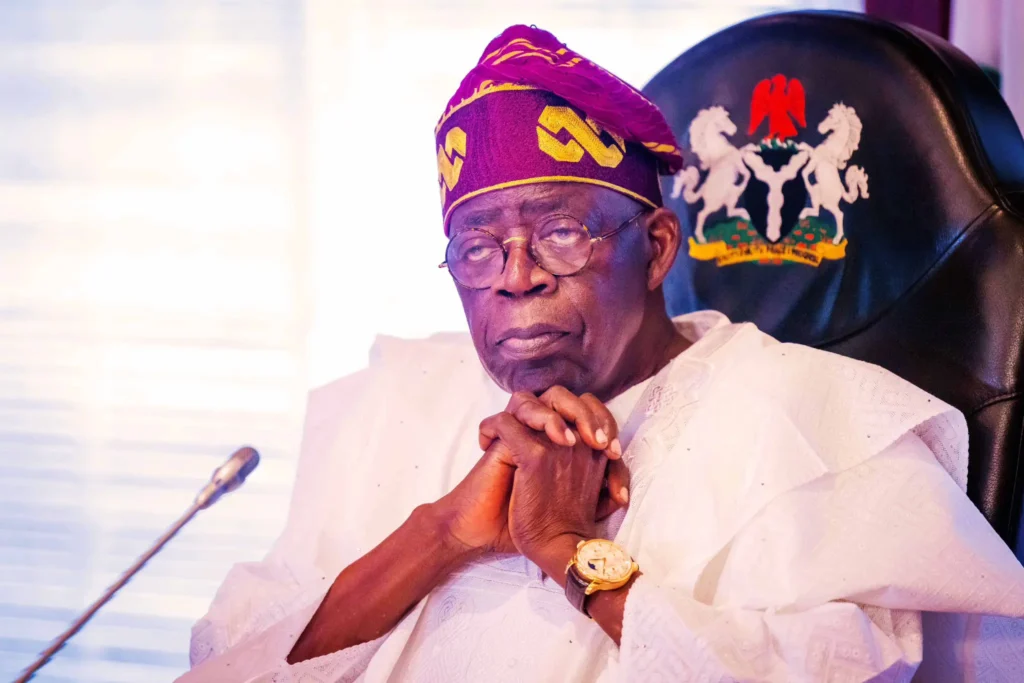
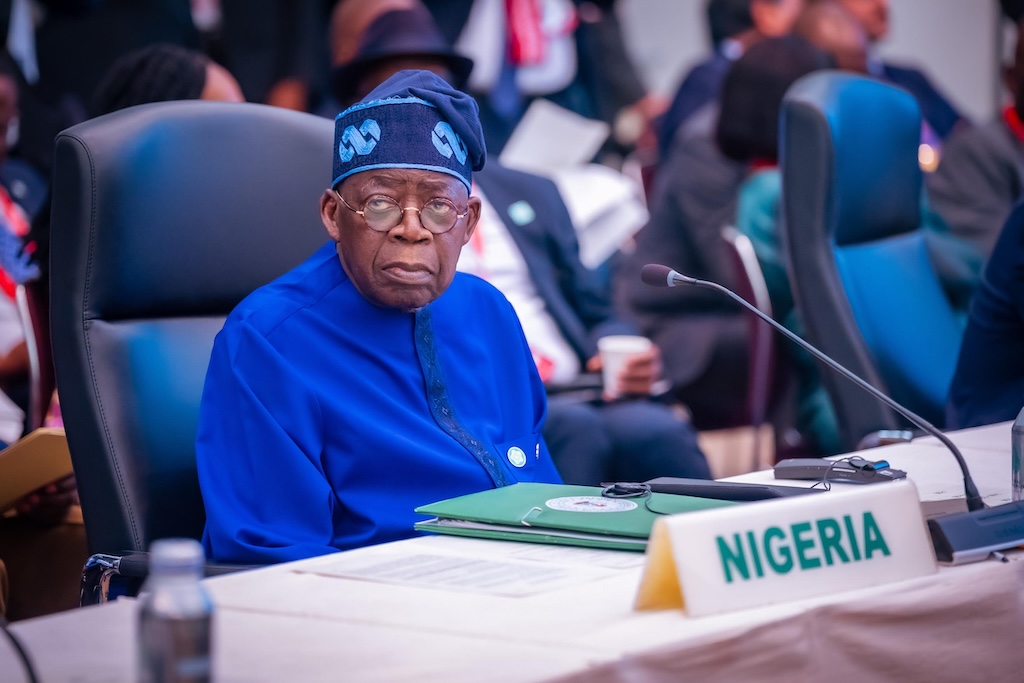
On Tuesday, President Bola Tinubu declared that his administration will not be intimidated by the direction of U.S. President Donald Trump’s trade policies, especially the tariffs aimed at Nigerian goods.
Tinubu made the statements while being greeted by members of the Buhari Organization, who were accompanied by Sen.
Tanko Almakura, who visited him at the Presidential Villa in Abuja as a show of solidarity.
Nigeria’s present economic trajectory and rising non-oil revenues were mentioned by the president as safeguards against outside shocks.
“We have no fear of whatever Trump is doing on the other side if non-oil revenue is growing,” Tinubu stated.
The naira has stabilized, rising to about N1,450 per dollar from a prior rate of N1,900 after he harmonized the exchange rates upon taking office in May 2023. He also emphasized Nigeria’s improved fiscal condition, having achieved its 2025 revenue objective as of August.
Wide-ranging changes to U.S. trade policy have been brought about by President Trump’s second term, including the implementation of country-specific levies in addition to a baseline 10% duty on almost all imports.
Trump’s “America First” program included historic reciprocal tariffs as part of his Liberation Day trade policy pronouncements on April 2, 2025, with the goal of rebalancing trade deficits.
In addition to a base tariff of 10%, the policy incorporated broad country-specific charges ranging from 11% to 50%.
Following an initial 14 percent rate established in April, Nigeria, like many of its sub-Saharan partners, now faces a 15 percent tax on its exports, which went into effect on August 7.
However, the new tariff structure does not apply to energy commodities such as gas and oil.
However, sources indicate that in early 2025, increased trade tensions and tariffs have already reduced exports of energy products worldwide, causing demand flows for diesel, gasoline, and crude oil to be disrupted.
Tinubu also highlighted advancements in his administration’s agriculture reform strategy, pointing to a significant regional mechanization initiative.
He asserted that food security is essential to Nigeria’s economic development and declared, “If we eliminate hunger, we have defeated poverty.”
Tinubu, meantime, described internal arguments that took place during the early years of the All Progressives Congress, stating that he and the late former President Muhammadu Buhari disagreed over the party’s emblem.
Tinubu recalled the first merger negotiations that resulted in the formation of the APC in 2013, saying, “We disagreed to agree. We even got into a fight over a symbol. While I insisted on a broom, Buhari insisted on parliament.
As everyone laughed, Tinubu remarked, “He’s so stubborn.”
The gathering on Tuesday, which included prominent northern party officials like former governor Aminu Masari and Katsina State governor Dikko Radda, may represent a party reorganization in preparation for the 2027 election cycle.
Four opposition parties—the Action Congress of Nigeria, the Congress for Progressive Change, the All Nigeria Peoples Party, and a branch of the All Progressives Grand Alliance—merged to form the APC in February 2013.
While Buhari led the CPC, Tinubu, the former governor of Lagos State and then national leader of the ACN, was instrumental in the merger.
Tinubu claimed that throughout the period leading up to registration by the Independent National Electoral Commission, their disparate political cultures frequently clashed.
According to party leaders, the broom, which was eventually selected as the party’s emblem, represented group action against corruption and bad governance.
Buhari came to office in 2015 when the coalition assisted the APC in defeating the long-ruling People’s Democratic Party.