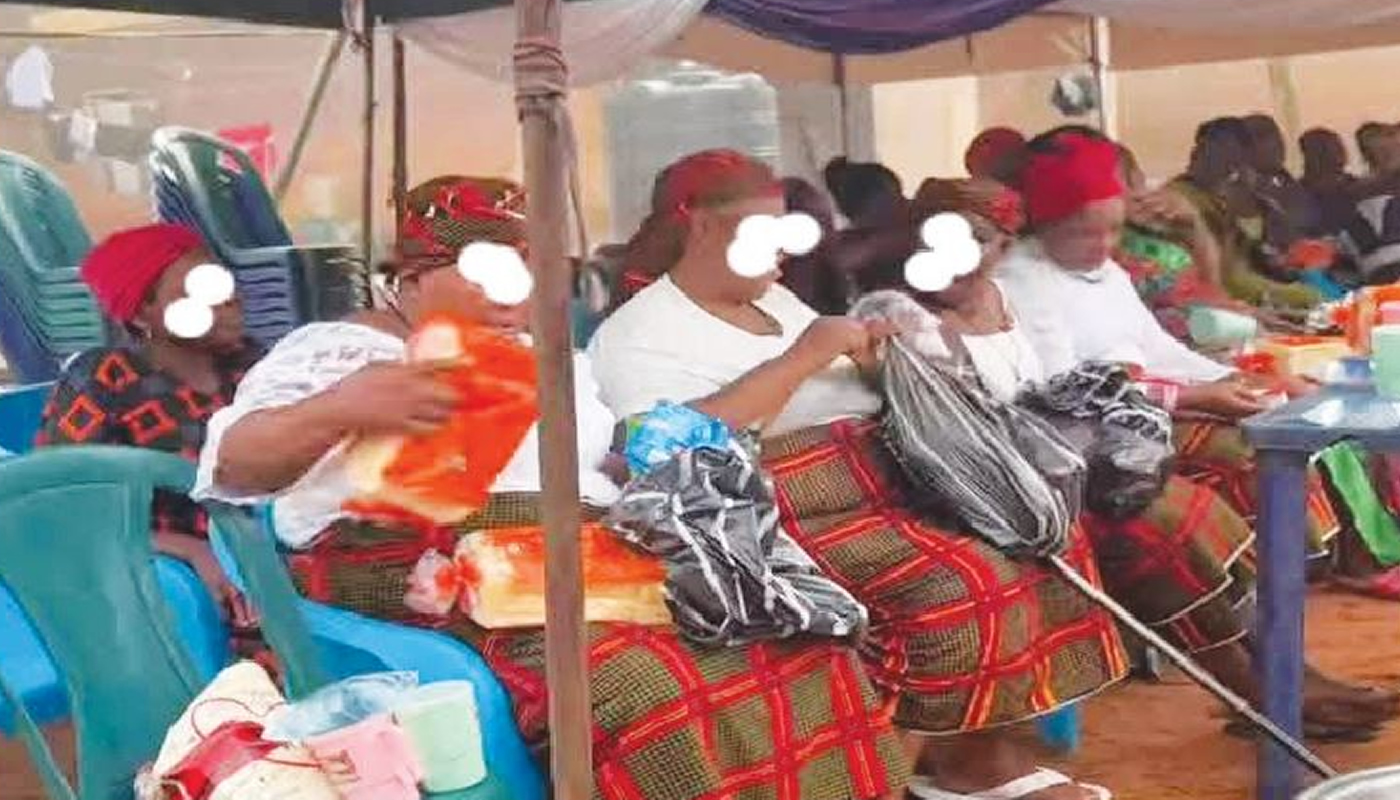
The Umuada represent a power conundrum at the core of Igbo civilisation. Being daughters of the land, they have the right to return after getting married and speak with a voice that frequently surpasses that of men.
Their influence is still felt throughout the Igbo landscape, sometimes as a sword that slashes at rights and dignity and other times as a shield for tradition. GODFREY GEORGE, however, questions whether they are enduring guardians of identity or have turned into tools of exclusion and abuse as the conflict between culture, law, and human rights intensifies.
“A chorom ima” (I’d rather not know). Not a single kobo will remain once you have paid everything. Is it okay if we go wa wa wa? (You do have a keen tongue, don’t you?) We’ll find out who is who.
During her father’s funeral, Nneoma, the sole surviving daughter of a retired government servant in Anambra State’s Ekwusigo Local Government Area, claimed that the harsh remarks she heard were the Umuada’s unyielding demand.
In Igbo culture, the Umuada, which means “daughters of the land,” are more than just a group of women; they are a powerful institution. As stewards of traditions, they return to their birthplaces with a sort of power that influences the social and spiritual fabric of their communities.
Their presence has the capacity to sanctify a funeral, resolve long-standing conflicts, or, as in Nneoma’s case, transform painful times of loss into contentious power struggles.
Nneoma and her two brothers, who are builders in Delta State, were left to take care of the family after her eldest sister passed away during childbirth.
Her mother’s body was brought to Ihite for burial years ago when she passed away following a brief illness. Some Umuada protested, claiming that she could not be considered a legitimate community wife because her marriage ceremonies had not been performed.
“Until that day, I was unaware that my mother and father were not legally wed. Nneoma noted that being called “children whose legs have not reached the ground” was both startling and humiliating.
Their voices rose in strong argument, and the gathering was divided. Her mother’s remains was eventually permitted to be lowered into the ground after persistent pleading, fines paid by the in-laws, and the intervention of the Umunna, the Umuada’s male equivalent.
Nneoma had a clear memory of the day. She and her deceased older sister had publicly argued with the women, their sorrow clashing with custom.
She was young, but she had not cowered. Her angry, piercing voice rebelled against the Umuada’s control.
In retrospect, she acknowledges that she may have spoken harsher than she meant to, but fear had no place there—only resistance.
She smirked and remarked, “I believe they took offence and kept a record of me.”
Therefore, the Umuada once more rebelled when her older sister passed away during childbirth and was sent home, unmarried to the guy who had fathered her child.
This time, she refused to affiliate and identify with the Umuada because she was the family’s eldest daughter, not because of familial ties.
Before the funeral could take place, Nneoma’s father and brothers had to make a plea and pay certain fines. Nneoma pointed out that the circumstances surrounding the young woman’s death were the only reason the women were able to forgive.
According to Nneoma, “they accused us of not paying dues or participating in communal chores like cleaning the village square.”
She found it difficult to discern the connection between Lagos and Abuja, where she lived with her sister.
“To be honest, I didn’t like these women’s practices, but my father and aunts brought it up once or twice at Christmas. “I threw the idea away,” she said.
By the time her father was buried, the Umuada’s demands had grown oppressive and unrelenting. They made the family compound their headquarters for two days in a row, expecting to be fed every hour. Bread and steaming tea were served in the morning, substantial meals were needed by midday, and platters of spicy isiewu were the only acceptable food at night.
At midnight, when the compound was in extreme quiet, they pounded on doors and woke her brother up, telling him to go get goat flesh so they could eat it. A particular brand of chocolate beverage for their tea, a particular malt beverage, and a beer brand of their choosing to “step down” their spicy soup were all non-negotiable preferences.
“They only intended to punish us,” Nneoma recalled painfully. It was awful. We continued to pay fine after fine, primarily as a result of my inability to speak.
And these women said that we left my father, who was a very well-liked man, until he passed away, saying that we did the same to our mother till she passed away.
“That is untrue. We had repeatedly requested that our father relocate to Delta State so that he could be with the boys, but he had refused. After retirement, he insisted on remaining at home. What should we have done? We planned to take him to Abuja while my older sister was still here, but he said he didn’t enjoy the noise and refused.
Nneoma and her brother were forced to cooperate in the end. They made sure there was plenty of refreshments during the burial, paid the penalties, and provided the women with tea and bread for the two mornings they camped.
She clarified, “My father warned us before he died that we must follow the customs of the land in order for his spirit to be accepted by the ancestors in the other world.”
We simply carried out his final desires. I would have buried my father in Lagos if it had been up to me. She exclaimed, “Let me see how they would come and drink tea at Ikoyi Cemetery.”
The experience of Nneoma is by no means unique. Punishments for purported offences, including as neglect, desertion, adultery, petty crimes, or even something as basic as not providing every item requested during a customary event, are administered in many Igbo communities, particularly among women.
Bathed in muddy water
An occurrence that troubled many occurred one February morning in a peaceful Igbo town, where the air was heavy with the cries of sorrow. Long accused of neglecting her mother-in-law during her lifetime, the woman had the audacity to attend the funeral. Outrage erupted upon her presence. The Umuada stepped in quickly. They accused her openly before the crowd and declared that she must be punished.
They marched her back along the dusty route after leading her to the local stream and making her fetch water with a clay pot that was perilously placed on her head. She had to kneel in front of the assembled throng as the Umuada bathed her in the water and then covered her flesh with mud that had been scooped up from the ground. She was publicly humiliated, her dignity taken away, and the Umuada insisted they were upholding her cultural rights.
Such scenes are neither unique nor completely obscure. They highlight the Umuada’s lasting influence and contentious position in Igbo society, where they were previously regarded as moral guardians and mediators.
They were known to question patriarchy, get involved in property disputes, and step in when men’s councils failed. Historically, they stood above factional politics. However, their acts in modern-day Nigeria have become contradictory, combining elements of a sword and a shield.
Videos of Umuada meetings where women are sprayed with filthy water for supposedly ignoring their household responsibilities abound on social media. Some are made to beg for pardon, while others are covered in mud or ashes.
Demands for bread and tea at funerals
The same cultural conflict became evident in another event three months later. After a Facebook post by an attendee said that a local Umuada group had acted insensitively during the ceremony of songs for a 26-year-old lady, a burial in the South-East went viral on July 5, 2025. The advertisement portrayed their tea and bread consumption as “uncaring” and unsuitable for a young deceased person.
The post, along with the accompanying photographs and video, sparked hundreds of online replies and discussions about the authority of Umuada at funerals and what constitutes polite mourning.
Local news websites and lifestyle blogs covered and analysed the episode, portraying it as a turning point in the evolving standards of ritual behaviour.
A second reality emerged from that episode: many observers believe that the same organisation that serves as a mediator and guardian of the community has turned ceremonial, theatrical, or out of touch with modern standards. These conflicts are now heightened and documented on social media.
The video follows a well-known pattern: communal discipline, forced “cleaning,” and public humiliation. Several brief clips that fit two linked patterns—local enforcement and social sanctioning at weddings and funerals, and crisis-era rites aimed at widows—have been posted by reporters, rights organisations, and individual users since February and July.
Blockade of a monarch’s gate
blocking the gate of a monarch
In the video, the women were shown protesting by throwing mud into his compound with sticks and even urinating on the grounds. For them, this spectacular performance was a means of upholding their authority in a society that still reveres and fears them, in addition to being an act of rebellion.
Social critic Dr. Uche Nworah commented on the film, saying that although Umuada are acknowledged as a strong group of women who were born into a village or kindred in Igboland, their tactics are frequently harsh, occasionally uncivilised, and generally regarded as being over the top. He clarified that many Umuada still insist on customs like staying at the houses of bereaved families and receiving tea in the morning at funerals, marriages, and other rituals. Some claim that these long-standing customs have been surpassed by time.
Families, however, usually bargain with them or make monetary settlements to prevent disputes.
“They are a very powerful group and play varying roles in society,” noted Nworah. People choose not to face their anger.
The beginnings of Umuada in pre-colonial Igbo history
Although they are born into a household, duty calls them back. The authority held by the Umuada is both performative and ancestral, private and public.
According to a number of academic sources, this authority was quite practical in the pre-colonial village: women cleaned the dead, posed challenging questions, put an end to conflicts, and influenced a community’s morality in ways that male councils frequently were unable to. Their influence was more cultural than legal; they could mobilise girls to shame, make amends, or change behaviour in an instant.
Many external manifestations of that authority changed with the arrival of colonial courts and missionary exhortations. A new rule limited the Umuada’s rites in certain towns, while others adjusted and incorporated their activity into newly formed civic duties. The Umuada occasionally reaffirmed themselves as viable organisations capable of relocating families and marketplaces in areas where the colonial state undermined the stability of male lineage. Their ability to reimagine in the face of new limitations was what allowed them to survive, not just conservatism.
Another change that occurred in the late 20th and early 21st centuries was institutionalisation.
As organised associations, Umuada chapters began to engage in diaspora outreach, widow advocacy, and education. They expressed communal issues in state fora and organised campaigns to protect women’s inheritance rights.
However, there was a more concerning continuity that accompanied this civic shift. When left unchecked, the same mandate that gave daughters the authority to chastise, make sure a woman fulfilled her marital duties, test a widow’s behaviour, and control ceremonial propriety may devolve into coercion and humiliation. Ironically, the enforcement system that used to hold males accountable for their excesses can now be used to regulate women’s bodies and decisions.
How can traditional institutions preserve their ability to resolve conflicts without infringing upon inalienable rights? This is the normative challenge at the heart of a just modern democracy.
In her July 2021 article, “Understanding Gender Complementarity in Igbo Society: The Role of Umuada and Umunna in Peacebuilding,” Dr. Ngozi Emeka Nwobia, a former dean of the Faculty of Social Sciences at Ebonyi State University, provides a thoughtful response.
Nwobia, who was the Southeast regional consultant for the Nigerian Women Trust Fund on a project funded by the Ford Foundation, argues that gender roles and relations in Igbo peacebuilding are fundamentally complementary, despite popular misconceptions that have obscured this fact. Of particular note is the early scholars’s portrayal of Igbo women as subservient, voiceless, and merely appendages to men, a sentiment that has long coloured outsider accounts of Igbo life.
“Women can only own property that their lords allow them to own, and they have very few rights under any circumstances.” There is no complaining about their lot; they live a reasonably satisfied life, accepting the circumstances as their grandmother did before them and approaching things philosophically.
Later academics, most notably Akachi Ezeigbo, have criticised Basden’s viewpoint as being inaccurate and based on a narrow knowledge of Igbo sociopolitical ties.
Igbo women rebelled against colonial policies during the anti-colonial Aba Women’s Riots of 1929, barely eight years after Basden’s observations. The fact that these same women, who were previously seen as helpless, were able to organise with such vigour indicates that they already had significant social influence.
According to Emeka Nwobia, Ifi Amadiume encapsulates the Igbo people’s flexibility in gender construction. She points out that in some circumstances, women can assume roles that are typically filled by men, gaining statuses like “male daughters” and “female husbands.”
When a man has no male heir, the custom of choosing a “male daughter” is sometimes adopted; a daughter may stay in her father’s home in order to bear male offspring that will bear his name. The daughter may pick a lover on her own, or her parents may select or accept one for her. In a similar vein, a woman who is childless or widowed and wants to maintain a family line can take on the role of “female husband.” A woman spouse may marry a woman who will have children under her husband’s name, or she may become wealthy and powerful enough to hold public office on par with men.
Because of this, certain Igbo names honour continuity. Ahamefula (“my name will not be forgotten”) and Amaefuna/Amaechina (“my compound will not go desolate”) are two examples. Therefore, gaining wealth and public power or making clever family arrangements are two ways to become a “female husband.” The behaviour in both instances demonstrates how Igbo social systems are flexible and how women have historically contested power within traditional constraints.
Umuada as peacekeeping pillar
The powers of Umuada can be noticed in their birth families, where they exercise authority and influence, as well as contribute to informal peacemaking and peacebuilding. Decisions reached by Umuada are considered final, even by the Umunna, despite their spheres of operation are practically the same.
According to Emeka-Nwobia, the Umuada use a variety of tactics to guarantee the preservation of their cultural legacy and harmonious cohabitation both inside their community and with their neighbours.
Traditional organisations like the Umunna and Umuada settle or make decisions on family and land issues, as well as conflicts between and within communities, in traditional Igbo society.
The bias and lack of trust in inherited Western legal systems, whose adjudication methods are costly, time-consuming, and tend to reward winners and punish losers without leaving room for reconciliation, are the main reasons their influence and power have persisted in modern society, she said.
Additionally, disputes tended to be rekindled at the slightest provocation, and the courts primarily provided transitory respite. Once more, it was well known during the colonial era that court clerks took bribes to tilt the verdict in favour of wrongdoing.
Because the Igbo people preferred to settle their disputes according to customary law and traditions, this resulted in a lack of faith in the colonial court system. Locals preferred and relied on indigenous institutions because they felt free to express themselves without worrying about being misrepresented or misunderstood, according to Okechukwu Ibeanu, who noted that the colonial judicial procedures were foreign to them and took a long time.
Although they may occasionally be formally invited, particularly in cases that have eluded Umunna’s efforts, she added that the Umuada do not wait for crises to be reported to them before offering their opinions because their ears are always on the ground to identify problem situations.
Thus, they are always the last resort when men fail.
Umuada membership
Although some communities in Igboland do not accept unmarried Ụmụada into the organisation, Emeka Nwobia pointed out that membership in Ụmụada includes both married and unmarried ladies from that community.
Because they are marginalised or readily discarded as “Nna ga-alụ” (literally, “father will marry”) or “Ọtọ n’aka Nne” (‘abandoned in the hands of the mother’), the unmarried girls (those who have reached marriageable age) are not as strong or vocal as the married ones.
In Igbo traditional civilisations, it was a burden for a fully grown girl to remain single, and unmarried women were generally viewed as social outcasts. Because of this, their married equivalents are regarded as more respectable even if they are daughters. Enabling women to maintain their matrilineal relationships is one of the Ụmụada association’s main goals.
This suggests that every Igbo woman is socialised to automatically belong to both the Ụmụada and Ndi Inyom from birth, and that after marriage, she joins both groups (a group of married wives in a given community).
She stated that as a married woman, she fulfils the roles of both wife (in her marriage home) and daughter (in her natal home).
The association is a powerful sociocultural and political institution in Igbo communities, the professor claims.
Umuada meeting
The opening prayer at an Umuada gathering is usually followed by the general greeting, “Chee che che, Umuada ekelee m’ unu” (Umuada, I greet you), and then the reply, “Hia.”
The eldest daughter, referred to as “Isi Ada,” grants discourse rights to anyone who wishes to speak.
In order to commemorate the daughter, the Isi Ada calls her by an honorific name. This is to affirm her freedom of expression and solidarity. In a session that is typically facilitated by the Isi Ada, the daughters alternate speaking.
The floor owner occasionally asks the audience to affirm her claim to the floor and show support for her viewpoints. With the words, “Kam kwube?” she wails. (‘Do I have to go on?’). After receiving an affirmative response, the woman continues speaking, the researcher saw.
Umuada has made significant contributions to the settlement of internal and intercommunal disputes in Igboland.
For instance, their initiatives played a key role in the peace processes that resolved the Umuode/Oruku war in Enugu State, the Aguleri/Umuleri conflict in Anambra State, and numerous other conflicts.
The Umuada employed the following tactics to maintain peace in the Aguleri/Umuleri conflict: discourse, one-on-one discussions, reconciliation sessions with the disputing parties, and questioning and information collection (Igba Nju).
They might even stage naked protests in Mbaise and other Igboland locations to make sure their ruling is followed. People in Igboland are the last arbiters in traditional conflict settlement because they fear provoking Umuada’s wrath.
The Umunna performs or supervises the oath-taking (iyi) or blood covenant (iko mme) that typically seals conflicts settled under this platform, which are binding on all community members.