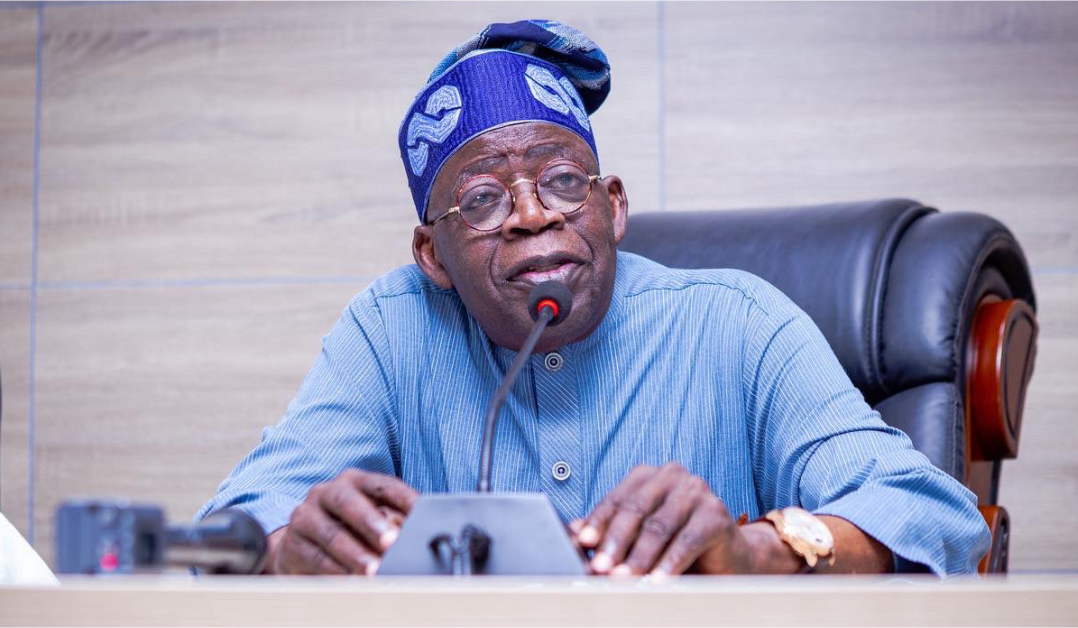
The Executive Vice-Chairman of the Nigerian Communications Commission, Dr Aminu Maida, has announced that President Bola Tinubu has eliminated the 5 per cent excise fee on telecoms services in the new tax laws, a move likely to reduce cost pressures on customers.
Speaking to reporters during an interactive session in Abuja on Tuesday, Maida clarified that the charge, which had been suspended at first, has now been abolished entirely.
“The excise duty, which was around 5%, is no longer there,” he stated. The president was generous enough to remove it completely after it had already been suspended. He answered, “No, no, no, we cannot put this on Nigerians,” as I was in a room when it was brought up. When the bills arrived and we realized that his words were kept, I was overjoyed.
A bill named “A Bill for an Act to Repeal Certain Acts on Taxation and Consolidate the Legal Frameworks relating to Taxation and Enact the Nigeria Tax Act to Provide for Taxation of Income, Transactions, and Instruments, and Related Matters” includes the five percent excise duty as part of a larger tax reform initiative.
Since it was first suggested in 2022 under the government of former President Muhammadu Buhari, the proposed tax has encountered significant criticism.
President Bola Tinubu suspended it in July 2023 due to public outcry, citing worries about the effect it will have on consumers and the economy.
According to Maida, the elimination of the duty would relieve subscribers’ strain while fostering the industry’s overall expansion, since Nigeria’s telecom sector is essential to both economic activity and digital inclusion.
He mentioned that the panel was working on reforms that were based on improved consumer protection, accountability, and transparency.
He clarified that the regulator was now using behavioral economics to supplement traditional rule-based regulation, particularly by disclosing information that would help operators and customers make better decisions.
According to him, one of the projects is a public network performance map that will be made available in September and will include impartial data on latency, download speeds, and other quality metrics.
“A quarterly network performance report based on user data will also be available,” he added. It makes infrastructure providers, who are essential to dependability, accountable in addition to mobile operators.
According to Maida, the industry would be strengthened through the implementation of corporate governance. He stated that the objective was to provide the groundwork for a fully owned, competently operated, and internationally competitive Nigerian telecom business. “Transparent, well-governed companies attract investment and perform better,” he added.
As proof of success, he cited measures like the completion of the NIN-SIM audit, the resolution of USSD debt disputes, the switch to end-user charging, and the establishment of a Major Incident Reporting Portal.
He emphasized that the 2000 telecom strategy, which aimed to dismantle the monopoly and bring in competition, had served its objective but now needed to be revised.
It was all about voice and text in the early 2000s. These days, the focus is on internet connectivity and the new technologies that rely on it, such as augmented reality, remote sensors, the internet of things, and artificial intelligence. “We need to adapt to new realities, but the policy did not fail,” he stated.
The most expensive call rate in the market today is roughly N18 or N19 per minute, compared to N50 per minute in the early 2000s, he said, demonstrating that competition is still a major influence in keeping call costs relatively low.
According to Maida, a joint NCC-CBN task force has created a new operational structure to standardize recharge procedures in response to consumer concerns regarding unsuccessful electronic top-ups.
In response to allegations about data depletion, he noted, Tier-1 audit firms were hired to look into operators’ billing systems.
He said that there was no evidence of systematic consumer data manipulation in the results. Consumer unhappiness was instead caused by elements like complicated price structures, device settings, and background app usage.
He declared, “We are not attempting to punish anyone.” “We want the industry to grow so that operators perform better, consumers are happier, and the government has a larger tax base.”
Freda Bruce-Bennett, the director of the NCC’s Consumer Affairs Bureau, also spoke at the event and offered helpful advice on how Nigerians can better handle their data.
Nigeria currently has 172 million active telephone subscribers, of which 141 million are internet users, accounting for 81.9% of the total, and 105 million are broadband users. She urged subscribers to turn off social media autoplay, limit background data, delete unused apps, activate data-saving modes, and use Wi-Fi whenever possible.
Nnenna Ukoha, the Director of Public Affairs at the NCC, emphasized the importance of the media in communicating regulatory efforts to the public, saying, “You are the ones that transmit and convey our transformative policies to the people of Nigeria. Therefore, I invite you to be open and talk to us freely.”