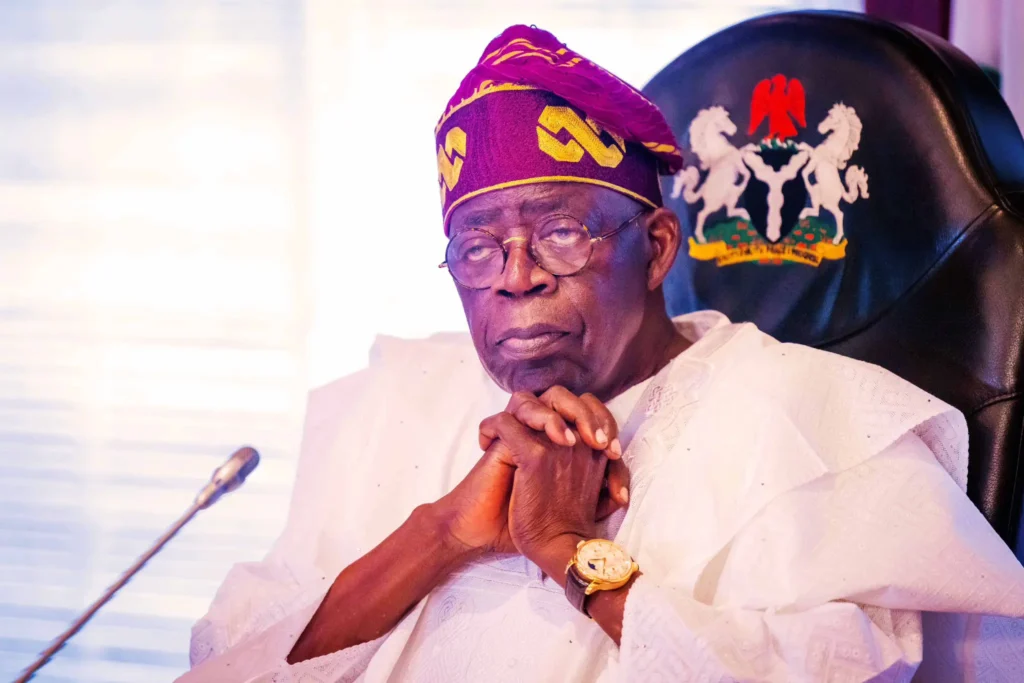
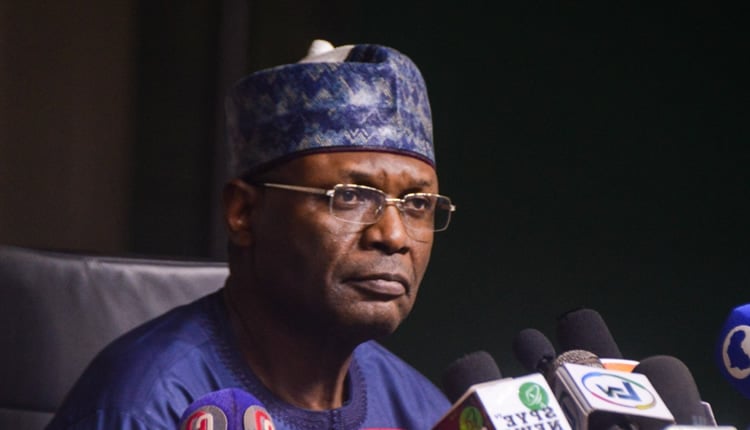
Following the conclusion of his second and final term as Chairman of the Independent National Electoral Commission, President Bola Tinubu formally accepted Professor Mahmood Yakubu’s resignation.
The President will appoint Yakubu’s successor following the Council of State meeting in Abuja on Thursday, after presenting the list of candidates for the coveted position of number one electoral umpire.
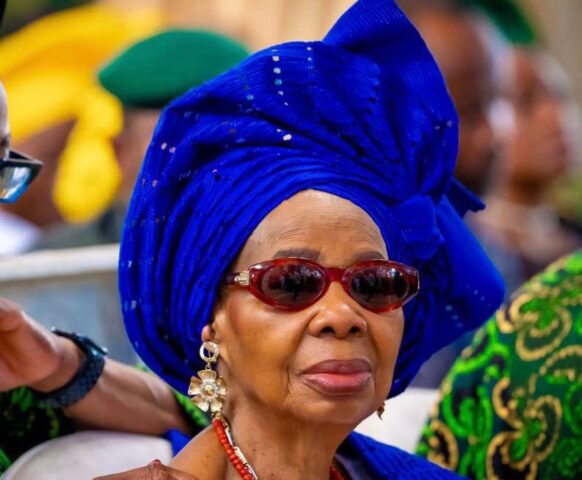
On Tuesday, Yakubu turned over the reins to May Agbamuche-Mbu, a seasoned legal expert who has taken over as acting chairman until a substantive successor is appointed. In appreciation of his service, the President awarded the former IEC chairman the national honour of Commander of the Order of the Niger.
Tinubu is anticipated to get advice on the future INEC chair from state governors, former presidents Olusegun Obasanjo and Goodluck Jonathan, and other Council of State members.
In a statement released on Tuesday, Bayo Onanuga, the President’s Special Advisor on Information and Strategy, said that Tinubu expressed gratitude to the departing INEC head for his contributions to the country.
“President Tinubu thanked Professor Yakubu for his services to the nation and his efforts to sustain Nigeria’s democracy, particularly through the organisation of free and fair elections throughout his two-term tenure,” the statement, “President Tinubu Accepts INEC Chairman’s Departure, Bestows National Honour on Him,” said.
President Tinubu has given Yakubu the title of Commander of the Order of the Niger in appreciation of his devoted service to the country.
“May Agbamuche-Mbu, the most senior national commissioner, will oversee the commission’s operations until the appointment process is finished,” President Tinubu further instructed Professor Yakubu.
Yakubu thanked the President for the honour of leading the commission for two terms in a letter dated October 3, 2025.
In response, Tinubu congratulated him for upholding Nigeria’s democracy and holding elections that he called “free and fair” throughout his time in office.
Yakubu was initially named the 14th chairman of INEC in November 2015, serving a five-year term.
He was reappointed in 2020 for a further five years, which are now over, after receiving Senate approval.
Yakubu presided over multiple off-cycle polls and the general elections in 2019 and 2023 over the decade.
Under his direction, INEC launched the Results Viewing Portal to provide immediate public access to polling station results and the Bimodal Voter Accreditation System for voter verification.
For the first time, BVAS was used in a state-wide election when INEC piloted it during the Anambra gubernatorial contest in November 2021.
In 2022, it was utilised in the elections for the FCT Area Council and a few off-cycle governorship elections in Ekiti and Osun.
As required by the Electoral Act 2022, it was fully implemented countrywide during the general elections in 2023.
Instead of just enrolling people before elections, Yakubu established a system of ongoing voter registration and record updating.
Many communities in Nigeria now have easier access to elections thanks to the substantial rise in voting places under his administration.
In order to improve monitoring and foster greater confidence in the process, the former head of INEC also promoted a regular election schedule and increased cooperation with political parties, civil society organisations, foreign observers, and the media.
In order to monitor performance across polling stations using performance indicators, Yakubu set up the Election Monitoring and Support Centre and additional predictive systems.
Under him, INEC implemented steps to improve participation for internally displaced people, priority voting for the elderly and vulnerable groups, and procedures to support people with impairments.
Despite significant public scrutiny and political pressure, Yakubu was able to maintain INEC’s institutional independence. He consistently highlighted neutrality and following the constitution.
Yakubu’s term was not without controversy, though, as the 2023 election saw delays and technical issues attributed to gearbox lags and system malfunctions.
INEC was frequently accused by political actors of preferring one party, particularly in close races. Polling places had major delays or security breaches during elections, especially in high-risk locations.
Moreover, during his term, worries about voter indifference and doubts about election fairness persisted.
Ifedayo Adedipe, a Senior Advocate of Nigeria, addressed the call for new selection guidelines for the appointment of a new INEC chairman. He dismissed the growing controversy over the INEC chair’s appointment, calling it a diversion from Nigeria’s more pressing electoral and governance problems.
Recalling that previous President Goodluck Jonathan appointed Professor Attahiru Jega, who subsequently conducted the election Jonathan lost in 2015, Adedipe questioned the obsession with the appointment process scandal.
Was Professor Jega not appointed by Jonathan? Jonathan lost the election, right? “We ought to concentrate on other matters instead of this matter of who appoints whom or what,” he stated.
Adedipe maintained that the conduct and mentality of political actors and citizens, rather than the leadership of INEC, were the main causes of the problems threatening Nigeria’s elections.
Does the INEC chairman visit polling places? No. Politicians donate money to voters on election day; this practice is known as “see and buy.” Instead of focussing on who gets appointed, you should consider how you will handle such issues,” he said.
He asserts that the integrity of elections is determined by the behaviour and character of officials and citizens, not by the INEC chairman.
“A successful election is not guaranteed by the future chairman. We are what we are,” Adedipe continued.
There was nothing improper with the President selecting Yakubu’s successor, according to Adedayo Adedeji, SAN.
“Yes, he has the authority to appoint, subject to the Nigerian Senate’s confirmation,” he said. The Constitution’s Sections 153 and 154 provide guidance on this. There is nothing fundamentally wrong with the president selecting the chairman, in my opinion.
Through the Senate confirmation process, we have created checks and balances that enable the voice of the people to be heard. Any appointee must go through a rigorous screening procedure that is devoid of political bias. However, Adedeji demanded thorough consultation before scheduling any appointments in order to guarantee a well-rounded choice.
“” At one point in time, a Committee on the Reform of INEC issued a suggestion. It said that the President should no longer be permitted to choose the INEC chairman, but regrettably, that change was never implemented.
Given that I learnt today that the INEC Chairman has given his notice of retirement and that Mrs. Agbamuche, the most senior national commissioner, has been selected to be in charge, the subject has thus become more pressing. Therefore, I firmly believe that the present president is making an effort to add independence and transparency to the selection of an INEC chairman.
“” Therefore, the President will still appoint and present these nominations to the Council of State. The Governor, the Vice President, the previous President, the former Chief Justice of Nigeria, and everyone else comprise the Council of State. It serves only as advice where it is, as it is at the moment.
It’s not as though they can truly refuse it. As a result, there are now calls for additional reforms to be made to the selection process. Some have even proposed that the Supreme Court should make the decision. But my honest opinion lies on the character and quality of the individual appointed.
A credible selection procedure was suggested by Wale Balogun, SAN, who pointed out that the system’s checks and balances are adequate to generate a trustworthy INEC umpire.
“I firmly believe that we simply need to strengthen the process so that a credible individual can be appointed and that we have such a system that can independently vet such persons,” he continued.
Although the system’s current reform and checks and balances are adequate to produce a credible individual, they are also so weak that they might not be able to effectively checkmate the president in the event that the president appoints an untrustworthy individual to the position. This is what I’m worried about.
A thorough screening procedure should provide a trustworthy electoral system, the top lawyer noted.
Yakubu hands over
Professor Yakubu gave INEC National Commissioner May Agbamuche-Mbu the position of acting chairman of the commission during a stakeholders’ meeting with Resident Electoral Commissioners on Tuesday at INEC headquarters in Abuja. He explained that his resignation was in line with Section 306, Subsections 1 and 2 of the 1999 Constitution (as amended).
“With just a few weeks left in my term, and after having the honour of serving the Commission for the past ten years, I acknowledge the tremendous challenges that lie ahead.” I’ve made up my mind.
“I am turning the reins over to one of the most senior national commissioners by appointment date in the interim. May Agbamuche-Mbu will act as the Commission’s chairman until a permanent chairman is appointed after consulting with other national commissioners.
This should give the appointing authorities enough time to choose a new chairman, I hope. Additionally, it will allow the newly appointed chairman to promptly get to work on the task of holding elections and electoral activities in the most logistically and demographically complicated setting in Africa.
Since 2015, I have collaborated with the Commission’s personnel as well as 24 national and 67 resident electoral commissioners. Those who participate in elections or have extensive knowledge of election administration are aware of how elections are conducted and what they include. I will always be grateful for the support of the Commission’s workers and succeeding secretaries around the country,” he said.
Yakubu thanked Nigerians, civil society organisations, development partners, colleagues, and stakeholders for their contributions to electoral processes throughout his administration.
“Among the most educated and patriotic and also most knowledgeable election officials I have worked with,” he said, praising the National Youth Service Corps members.
Above all, I want to thank Nigerians for their criticism and opinions, which pushed us to keep going instead of giving up.
“Election Management in Nigeria 2015–2025” and “Innovations in Electoral Technology 2015–2025,” two books detailing the commission’s activities during his term, were presented by Yakubu as part of his departure.
As he turned things over to Agbamuche-Mbu, Yakubu remarked, “At this point, all that is left for me to do is pray that God will continue to bless our country and our democracy.”
“I am now pleased to sign my official handing over notes and present them to Agbamuche-Mbu,” he continued. And I’m going to leave from there.
The outgoing chairman described the Commission’s preparations for a number of forthcoming elections prior to his departure, including the governorship election in Anambra State next month, the Area Council election in the Federal Capital Territory in February 2026, the governorship election in Ekiti State in June 2026, and the governorship election in Osun in August 2026.
While waiting for “a new Electoral Act currently before the National Assembly” to be passed, he also affirmed that “INEC has already begun preparations for the 2027 general elections.”
In addition to these evaluations, the commission must further purify the voter registration, examine the locations of certain voting stations, and assign voters to them. Another significant area of endeavour is the administration of party primaries,” he stated.
Yakubu considered the difficulties and logistical aspects of overseeing Nigeria’s election process, emphasising problems including instability, floods, and the requirement to modernise voting procedures for internally displaced people.
“We have made significant progress in addressing obstacles and implementing numerous technologies throughout the years. In addition to replacing many of our manual procedures with digital platforms and applications, we have centralised the voter biometric register,” he stated.
Technologies for identifying election facilities, virtual training, managing political party funds, and election monitoring through the Election Monitoring and Support Centre are just a few of the advances he mentioned that were implemented under his direction.
“Yes, we have come a long way, but there is still much more to be done,” he stated.
Yakubu, who was born in May 1962, was the Executive Secretary of the Education Trust Fund prior to his entry into electoral administration.
Yakubu succeeded Professor Attahiru Jega as INEC chairman on November 9, 2015, after being confirmed by the Senate and nominated by former President Muhammadu Buhari on October 21, 2015.
He was confirmed by the Senate once more in 2020 for a second five-year term, which was the first in Nigeria’s democratic history.
With more than 30 years of experience, Agbamuche-Mbu is a seasoned attorney who has advised a wide variety of clients in the public and private sectors.
In 2016, she received confirmation as the National Commissioner of INEC.
She was born in Kano, Delta State, and went to St. Louis Secondary School. She was admitted to the Nigerian Bar in 1985 after receiving her LLB from the University of Ife (now Obafemi Awolowo University) in 1984. After attending the London College of Law, she went on to become a qualified solicitor of the Supreme Court of England and Wales. May has also finished postgraduate courses in international business law and international dispute resolution, and she has an LLM in commercial and corporate law from Queen Mary and Westfield College in London.
She is a specialist in ADR and a member of the Nigerian branch of the Chartered Institute of Arbitrators, where she was the secretary. She served as the only attorney on the Presidential Projects Assessment Committee from 2010 to 2011, which assessed important unfinished public projects around Nigeria. She joined the Ministerial Committee in 2016 that was in charge of creating the Solid Minerals Sector Roadmap.
Before joining INEC, Agbamuche-Mbu
was the editor of THISDAY LAWYER, a well-known weekly legal column, and the managing partner of Norfolk Partners, a law company located in Lagos. She wrote 120 legal editorials for her popular column, Legal Eagle, between 2014 and 2016.
Tajudeen Abbas, the Speaker of the House of Representatives, has promised that the parliament will support reforms pertaining to the nation’s electoral, economic, and security sectors.
In his welcome speech to House members on Tuesday, he made this statement as the House returned from its yearly break, which began on July 24, 2025.
Prominent Nigerians and civil society organisations have called for changes to the country’s electoral rules, especially with regard to real-time electronic results transmission.
The senseless murders of hundreds of innocent Nigerians in Plateau, Zamfara, Benue, and Kwara State over the past few months have fuelled calls by some citizens to implement state policing as a supplement to the nation’s current centralised policing model.
“The responsibilities before us are substantial, and the progress we have made so far is meaningful but incomplete,” Abbas reminded the MPs during his speech.
He went on, “We need to focus on a few critical tasks in the upcoming months. The constitutional amendment is the most important of these. There are currently 87 proposals pending discussion and voting on issues including socioeconomic rights, judicial reform, local government autonomy, and devolution of powers.
“In order to facilitate early concurrence prior to the election period, we must now finalise these votes and forward the approved amendments to the State Assemblies by the end of December.”
“The Electoral Act Amendment Bill seeks not only to strengthen measures against violence, improve access for persons with disabilities, and establish clearer timelines for resolving disputes, but also to reduce the ambiguities that trailed the last elections,” the speaker added, emphasising that the House must complete electoral reforms well in advance of the general elections in 2027.
“We want to reduce the cost of elections through single-day voting, make the party primary process more inclusive and democratic, and make elections less acrimonious and litigious,” he continued. Provisions for an Electoral Offences Commission are among the related constitutional amendments. Our objective is to create a new electoral act that is durable.
He emphasised that “we are all HeForShe in advancing gender inclusion, and how we vote on this bill will shape how history and our daughters remember us.” He said that the Reserved Seats Bill for women is essential to gender inclusion in the nation’s democratic system.
Abbas, who is the representative for Kaduna State’s Zaria Federal Constituency, added that security reforms are still of utmost importance and that the discussion of multi-level policing “must move from theory to decisive legislative action.”
Although state police are still a possibility, he continued, “We must revise the Police Act, 2020 to strengthen community policing.”
While section 33(1) gives the Inspector-General of Police recruitment authority and section 19 creates Community Policing Committees, the Speaker noted that both measures “centralise too much authority and limit local responsiveness.”
“We ought to think about giving states more authority over the hiring, training, and deployment of community police officers under federal supervision. This would maintain national norms and cooperation while allowing states more influence over their security architecture.
“We must use legislative measures to speed up the implementation of the Start-up Act, vocational training hubs, and technology parks,” Abbas said in reference to the economy. Progressive laws that support renewable energy, improve grid stability, and draw in private capital are equally crucial for stabilising the electricity supply and fostering economic growth.
“We are held to higher standards by the Nigerian people, who anticipate intentional action that enhances their quality of life. President Bola Ahmed Tinubu’s Renewed Hope administration has worked to improve security, stabilise the economy, and draw in investment.
“These initiatives necessitate a legislature that engages constructively with all branches of government, creates sound laws, and provides strict oversight.”
Regarding instability, Abbas maintained that the security forces had freed kidnapped individuals and broken up rebel networks.
Despite advancements, Nigerians continue to face high living expenses, underemployment, and insecurity in certain regions. These issues give us the chance to enact specific laws and encourage further participation in order to build a better future for everybody.